
Arizona’s warm climate provides the perfect environment for many types of spiders, making encounters around homes and businesses more common year-round. While the vast majority of spiders are harmless and even help control insect populations, a few venomous species deserve extra attention. Knowing how to identify these spiders, where they typically hide, and what attracts them to your property can help you reduce the risk of unwanted encounters.
Venomous spiders often seek shelter in quiet, undisturbed areas such as garages, sheds, wood piles, and storage spaces. Taking preventative measures and addressing conditions that attract spiders can go a long way toward protecting your home and family.
Which Venomous Spiders Live in Arizona?
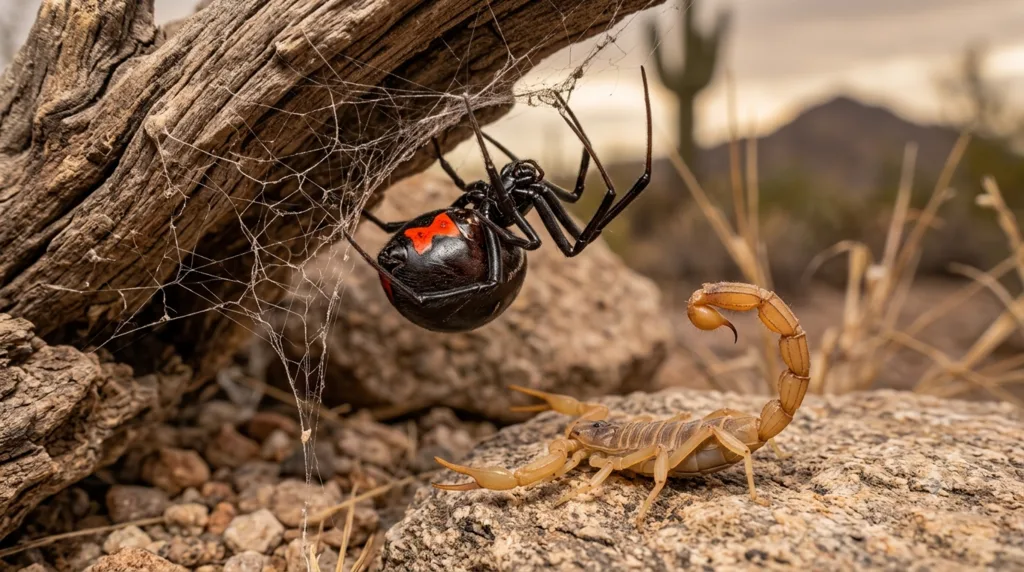
Arizona is home to hundreds of spider species, but only a small number are considered medically significant. Understanding which spiders are venomous can help you respond appropriately if you encounter one on your property. It is equally important to know that many spiders commonly found around Arizona homes are harmless and are often mistaken for more dangerous species.
Black Widow Spiders
The black widow is the venomous spider Arizona homeowners are most likely to encounter. Female black widows are easy to recognize by their shiny black bodies and distinctive red or orange hourglass marking on the underside of the abdomen. Males are much smaller, lighter in color, and rarely bite.
Black widows prefer dark, secluded areas where they can build irregular webs and avoid human activity. Common hiding places include garages, storage sheds, woodpiles, outdoor furniture, irrigation boxes, and areas beneath decks or patios. Because they are not aggressive by nature, bites usually occur when the spider is accidentally disturbed or trapped against the skin.
Desert Recluse Spiders
Many people believe brown recluse spiders are common throughout Arizona, but in most parts of the state, they are rarely found. Arizona is more likely to have desert recluse spiders, which belong to the same family and share many characteristics.
Desert recluse spiders are light brown and may have a violin-shaped marking near the head, though this marking is not always easy to identify. They typically hide in undisturbed locations such as attics, closets, storage boxes, and crawl spaces. Because these spiders avoid people whenever possible, encounters are relatively uncommon.
Spiders That Are Often Mistaken for Venomous Species
Several harmless spiders are frequently confused with black widows or recluse spiders. Wolf spiders, huntsman spiders, and tarantulas are all found in Arizona and can appear intimidating because of their size or appearance. However, these spiders are generally not considered dangerous to people and often help reduce insect populations around the home.
If you discover a spider and are unsure whether it is venomous, avoid handling it. A professional pest control inspection can accurately identify the species and determine whether treatment is needed. Proper identification helps ensure the right solution while avoiding unnecessary concern over harmless spiders.
Where Venomous Spiders Commonly Hide Around Arizona Homes
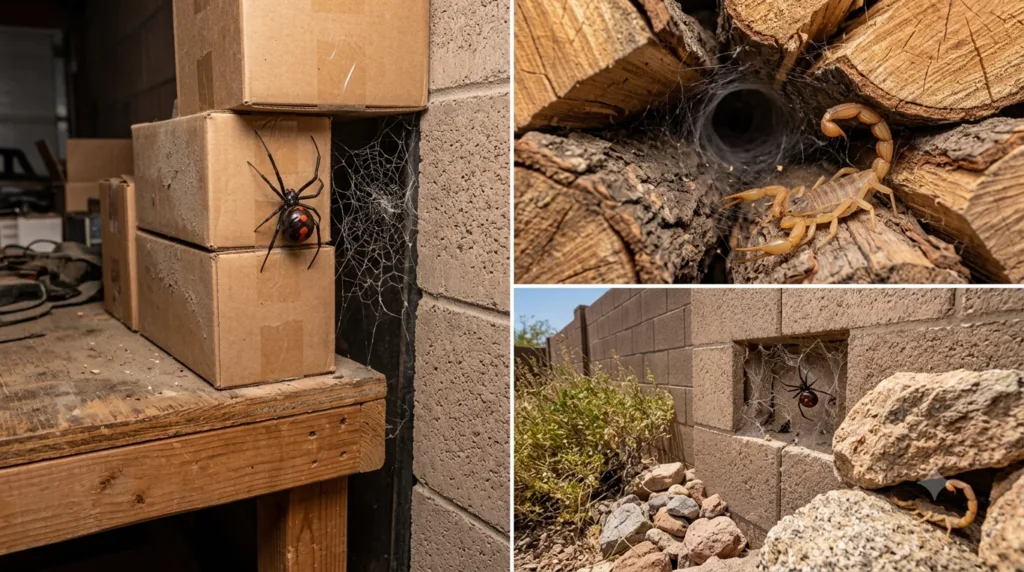
Venomous spiders prefer quiet, sheltered locations where they are unlikely to be disturbed. While they can be found both indoors and outdoors, they typically choose areas that provide protection from Arizona’s extreme temperatures and easy access to insects for food. Knowing where spiders are most likely to hide allows homeowners to inspect these areas regularly and address potential problems before they become larger infestations.
Common Outdoor Hiding Places
Many spider encounters begin outside the home. Black widows, in particular, are well adapted to outdoor environments and often build webs in protected locations.
Some of the most common outdoor hiding places include:
- Wood piles are stacked against the home.
- Storage sheds and outdoor cabinets.
- Under patio furniture and barbecue grills.
- Around block walls and fencing.
- Irrigation valve boxes.
- Landscaping rocks and decorative boulders.
- Children’s play equipment that isn’t used frequently.
- Garage door corners and exterior light fixtures.
Keeping these areas clean and reducing clutter can make your property less inviting to spiders.
Common Indoor Hiding Places
When temperatures are extremely high or food becomes scarce outdoors, spiders may move indoors in search of shelter. Fortunately, they usually remain in areas with little human activity.
Check these locations regularly:
- Garages and workshops.
- Attics and crawl spaces.
- Closets used for long-term storage.
- Laundry rooms.
- Behind large appliances.
- Under sinks with plumbing access.
- Cardboard boxes stored on the floor.
- Utility rooms and storage areas.
Using plastic storage containers instead of cardboard boxes can help eliminate some of the hiding places spiders prefer.
What Attracts Spiders to Your Property?
Spiders don’t enter a home without a reason. In most cases, they’re following a food source or looking for a protected place to live.
Several conditions make a property more attractive to spiders, including:
- Large populations of insects such as crickets, flies, and cockroaches.
- Cluttered garages, sheds, and storage rooms.
- Overgrown landscaping touching the home.
- Gaps around doors, windows, and utility openings.
- Moisture near outdoor faucets or plumbing leaks.
- Undisturbed areas that are rarely cleaned.
Reducing these conditions can significantly lower spider activity around your home. Regular pest control treatments also help by controlling the insects that spiders depend on for food. When their food source is removed and hiding places are limited, spiders are much less likely to settle on your property.
Signs You May Have a Spider Problem
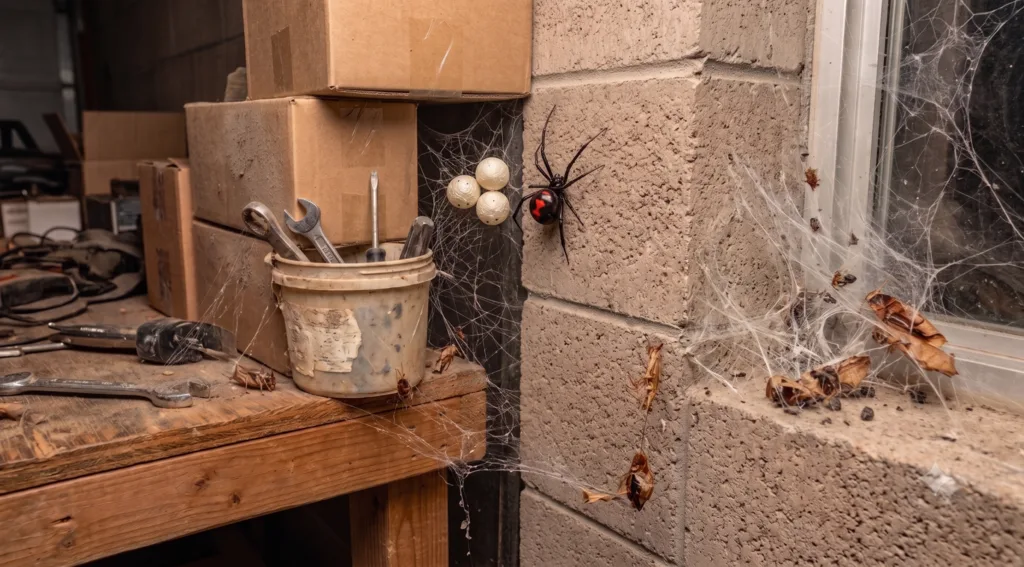
Seeing an occasional spider inside or outside your home is normal, especially in Arizona. However, frequent sightings or recurring spider activity may indicate that your property offers the shelter and food sources spiders seek. Recognizing these warning signs early can help you address the problem before it becomes more difficult to manage.
An Increase in Spider Webs
One of the most obvious signs of spider activity is the appearance of new webs around your property. While different spider species build different types of webs, finding them repeatedly in the same locations often indicates that spiders have established themselves nearby.
Pay close attention to areas such as:
- Garage corners.
- Storage sheds.
- Window frames.
- Exterior lighting fixtures.
- Patio furniture.
- Eaves and overhangs.
- Around outdoor equipment.
If you find yourself removing webs regularly only to see them return a few days later, it’s a good indication that spiders are actively living on your property.
Frequent Spider Sightings Indoors
Finding a spider every once in a while isn’t unusual. Seeing spiders regularly in multiple areas of your home is a different story.
You may notice spiders:
- Crawling across walls or ceilings.
- Inside closets or storage rooms.
- In garages and workshops.
- Around windows and doors.
- Under furniture or behind appliances.
Repeated indoor sightings often suggest that spiders have found suitable hiding places inside your home.
An Increase in Other Household Pests
Spiders go where their food is. If your home has an active insect population, it naturally becomes more attractive to spiders.
Common insects that attract spiders include:
- Crickets.
- Cockroaches.
- Flies.
- Ants.
- Moths.
Routine pest control services often help reduce spider activity as well.
Spider Egg Sacs Around Your Property
Spider egg sacs are another sign that spiders are reproducing on your property. Depending on the species, each egg sac may contain dozens or even hundreds of spider eggs.
These sacs are commonly found in garages, sheds, under patio furniture, inside storage boxes, or tucked into protected corners around the home’s exterior. Removing egg sacs promptly can help prevent a much larger spider population from developing.
Venomous Spider Sightings Should Never Be Ignored
If you identify or suspect you’ve found a black widow or desert recluse spider, it’s best to avoid disturbing it. Attempting to remove a venomous spider without the proper equipment can increase the risk of a bite.
A professional pest control inspection can identify the spider species, locate additional hiding areas, and recommend the most effective treatment plan to help keep your home protected.
How to Reduce the Risk of Venomous Spiders Around Your Home
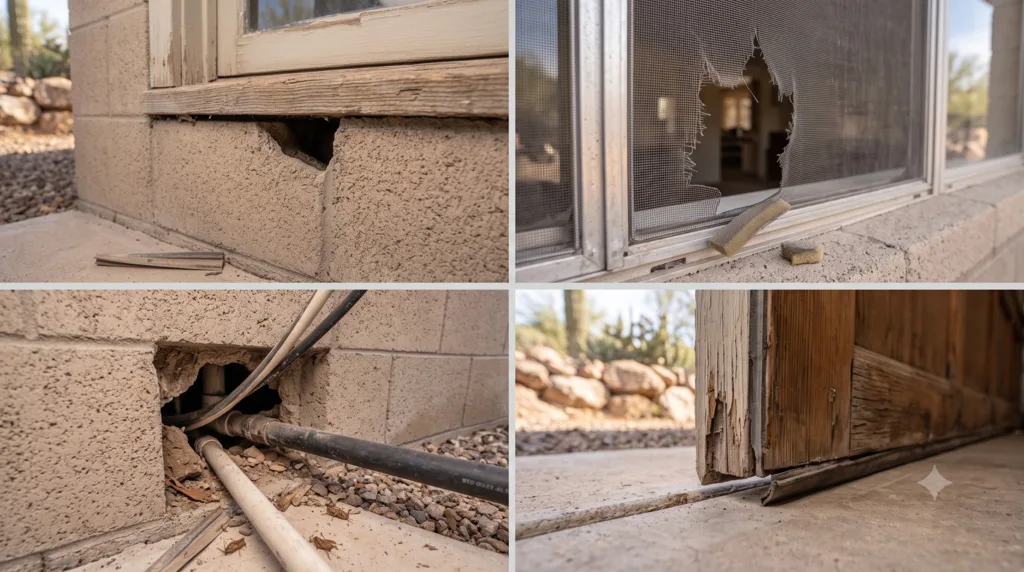
Preventing venomous spiders from settling around your property starts with making your home less attractive to them. Since spiders seek shelter, food, and quiet places to build webs, addressing these conditions can significantly reduce the likelihood of an infestation. Combining good home maintenance with routine pest control provides the best protection for Arizona homeowners.
Eliminate Their Food Source
Spiders rely on insects for food, so reducing insect activity is one of the most effective ways to discourage spiders from staying on your property.
Professional pest control treatments target common household pests such as crickets, cockroaches, ants, and flies that attract spiders. By controlling these insects, you create an environment where spiders are less likely to thrive.
Exterior perimeter treatments can also help prevent insects from entering your home, reducing food sources both indoors and outdoors.
Keep Your Home and Yard Free of Clutter
Spiders prefer dark, undisturbed spaces where they can build webs without interruption. Organizing storage areas and reducing clutter removes many of their favorite hiding places.
Consider these simple maintenance tips:
- Store items in plastic containers instead of cardboard boxes.
- Keep garages and storage sheds organized.
- Avoid piling unused materials against your home.
- Store firewood away from the foundation.
- Regularly clean behind appliances and in storage areas.
Making these spaces less inviting encourages spiders to move elsewhere.
Seal Potential Entry Points
Even small gaps around your home can provide an easy entry point for spiders and the insects they hunt.
Inspect your property for:
- Gaps around doors and windows.
- Damaged window screens.
- Cracks in the foundation.
- Openings around plumbing and utility lines.
- Worn weatherstripping on garage doors.
Sealing these areas helps keep both spiders and other pests from entering your home.
Maintain Your Landscaping
Your landscaping can significantly impact spider activity. Overgrown vegetation and accumulated debris create cool, sheltered environments where spiders can hide close to your home.
To reduce outdoor harborage areas:
- Trim shrubs and tree branches away from exterior walls.
- Remove leaf litter and yard debris regularly.
- Keep decorative rocks and mulch well-maintained.
- Avoid allowing vines or dense plants to grow against the house.
- Limit outdoor clutter around patios and storage buildings.
Well-maintained landscaping improves visibility while reducing the number of protected hiding places available to spiders.
Schedule Routine Pest Control Services
Even with good maintenance habits, spiders can still find their way onto your property. Routine pest control services provide an added layer of protection through regular inspections, targeted treatments, and preventive measures tailored to Arizona’s unique climate.
A trained pest control professional can identify conditions that attract spiders, locate hidden activity, and recommend solutions before a small issue develops into a larger infestation. Regular service helps keep spider populations under control year-round while protecting your home from many other common household pests.
Protect Your Home from Venomous Spiders
While Arizona is home to a variety of spider species, only a small number pose a significant health risk. Understanding where venomous spiders hide, recognizing the warning signs of spider activity, and taking preventative measures can go a long way toward protecting your home and family. Simple steps such as reducing clutter, sealing entry points, maintaining your landscaping, and controlling the insect populations that attract spiders all help create a less inviting environment.
Even with proactive maintenance, spiders can still find their way onto your property. Routine inspections and professional pest control services provide an added level of protection by identifying problem areas and treating them before they become larger infestations. Whether you’ve seen a black widow in your garage or simply want greater peace of mind, having an experienced pest control team on your side can make all the difference.
If you’re concerned about venomous spiders around your home, 520 Termite & Pest Control is here to help. Our experienced technicians provide thorough inspections and effective treatments designed for Arizona homes and businesses. Contact us today to schedule a spider inspection and take the first step toward a safer, pest-free property.
Frequently Asked Questions