
Arizona bugs don’t play around, and if you have a dog or cat, you’ve probably already seen it firsthand. Most pests are just annoying. But a smaller group can bite or sting and inject venom, which can lead to severe pain, swelling, vomiting, tremors, or even emergency vet visits.The biggest issue is that pets don’t avoid danger the way humans do. Dogs sniff, chase, paw, and bite anything that moves. Cats hunt. That curiosity is exactly what puts them at risk for scorpions, venomous spiders, and stinging insects around your home and yard.This guide breaks down the most common venomous bugs and pests in Arizona that can harm dogs and pets, outlines the symptoms to watch for, and explains how to reduce the likelihood of these pests appearing in the first place. If your pet shows swelling, difficulty breathing, vomiting, weakness, or unusual shaking, call your veterinarian or an emergency animal hospital immediately. Pest control is about prevention. Your vet is the right first call for treatment.

Venomous vs. Poisonous: The Difference (And Why It Matters for Pets)
Before we get into specific pests, it helps to clear up one common misconception. People often use “venomous” and “poisonous” like they mean the same thing, but they don’t.
Venomous pests inject toxins through a bite or sting. This includes scorpions, certain spiders, and stinging insects like wasps and bees. The venom is delivered directly into the body, which is why symptoms can show up quickly and why some bites and stings can become medical emergencies for pets.
Poisonous pests cause harm when they’re swallowed, chewed, or sometimes even licked. In those cases, the toxins enter through the digestive system or the mouth. This is more common with certain toads, plants, and chemicals, but some insects can also cause problems if a dog eats them.
This matters because pets interact with pests differently than people do. Humans usually get stung or bitten by accident, like stepping too close to a nest or reaching into a dark corner. Dogs and cats are more likely to sniff, paw, chase, or bite the pest directly. That means they’re more likely to be stung on the face, mouth, or paws, and they’re also more likely to get multiple stings or bites in a short amount of time.
The Most Dangerous Venomous Bugs for Pets in Arizona
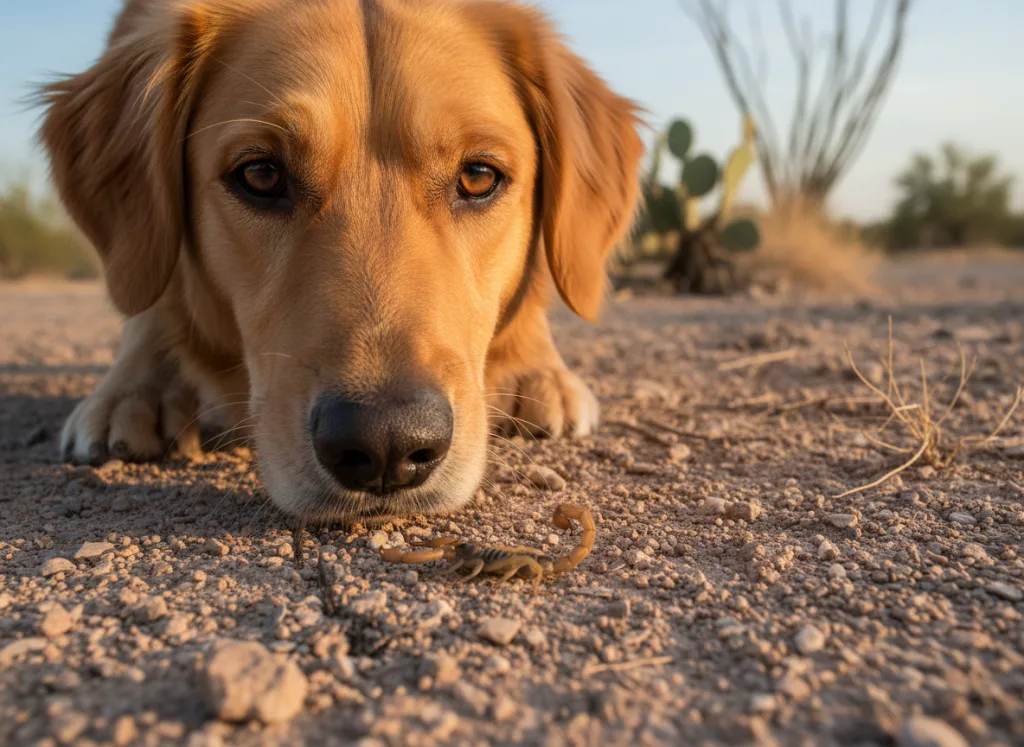
Dogs and cats don’t “back away” when they spot a threat. They investigate. They chase. They sniff. And in many cases, they try to bite. That’s why pets are more likely to be stung on the face or mouth, and why their symptoms can escalate quickly.
Below are the venomous pests Arizona pet owners should take most seriously.
Arizona Bark Scorpions
Bark scorpions are the most venomous scorpions in North America, and they’re common around Arizona homes. They also get inside more often than most venomous pests, which is why they’re one of the biggest concerns for pet owners.
Around homes, bark scorpions hide in tight, dark areas like block walls and wall cracks, under rocks and pavers, inside wood piles, and in garage clutter. They’re also commonly found around patio furniture and irrigation boxes, especially in yards with desert landscaping.
Dogs are most often stung on the paws, nose, face, lips, and mouth. Many stings happen when a dog steps on a scorpion at night or tries to sniff or bite one in the yard. Symptoms can include yelping, limping, pawing at the face, drooling, and swelling. In more serious cases, you may also see tremors or twitching, which should be treated as urgent.
Scorpion activity is often tied directly to other pests. Scorpions follow food, so if your yard has crickets or roaches, scorpions are more likely to show up and stick around.
Black Widow Spiders
Black widow spiders are among the most dangerous spiders found around Arizona homes, and they tend to live in areas where pets explore the most. They commonly hide in garage corners, block walls, under patio furniture, inside storage areas and sheds, and around outdoor equipment like grills and storage bins.
Pets are most likely to be bitten when they sniff into dark corners, paw at spider webs, or explore cluttered spaces where black widows stay hidden.
Symptoms of a black widow bite can include muscle pain or stiffness, tremors, vomiting or drooling, and weakness. If you suspect your dog or pet was bitten by a black widow, contact your veterinarian immediately.
Recluse-Type Spiders and Other Look-Alikes
Many “brown recluse” sightings in Arizona are misidentifications. While people often assume any brown spider is a recluse, Arizona has several other spider species that can look similar, and many skin wounds blamed on spiders are actually caused by irritation or infection.
What matters most is how the bite area changes over time. If a bite looks worse after 24 to 72 hours, it should be treated seriously, even if you never saw the spider.
Signs of tissue damage or infection can include swelling with increasing pain, a wound that darkens or spreads, lethargy, and fever or appetite loss. If you notice these symptoms, contact your veterinarian right away.
Bees, Wasps, Yellowjackets, and Hornets
Bees, wasps, yellowjackets, and hornets are among the most common reasons pets end up at the vet. Dogs chase flying insects, snap at them, and often get stung when they step on one in the yard or try to bite one out of the air.
The biggest risk is a sting in the mouth or throat. If a dog bites a bee or wasp, swelling can develop quickly in the tongue, mouth, or airway, potentially interfering with breathing and requiring emergency treatment.
Some pets also have allergic reactions to stings. Warning signs include facial swelling, hives, vomiting, trouble breathing, and collapse. If your dog shows any breathing changes or becomes weak after a sting, call an emergency veterinarian immediately.
Around Arizona homes, stinging insects commonly nest under patio covers and eaves, inside sheds, in bushes, in wall voids, and underground in yard nests.
Fire Ants
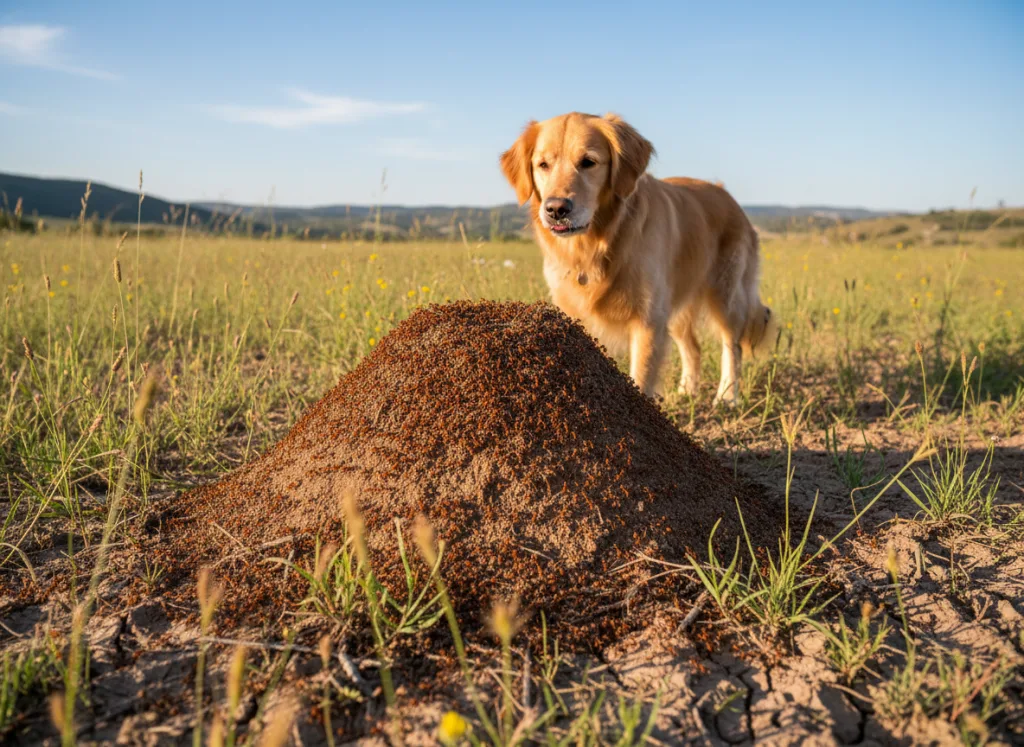
Fire ants can be dangerous to pets because they don’t sting once and move on. They swarm, which means a dog can be stung many times within seconds, especially if they step into a mound or stop to sniff it.
Stings most commonly show up on the paws and legs, the belly if the dog lies down, and the face if they investigate the mound up close. Fire ant stings can also trigger allergic reactions. In sensitive dogs, the stings may cause intense swelling, hives, and severe irritation.
Fire ant mounds can be easy to miss because they often blend into gravel landscaping and lawn edges. If you’ve noticed aggressive ants that swarm quickly, it’s worth having the area treated before your pet gets stung again.
Velvet Ants (“Cow Killer” Wasps)
Velvet ants, sometimes called “cow killer” wasps, aren’t ants at all. They’re a type of wingless wasp known for delivering an extremely painful sting, and dogs tend to react immediately when they get hit.
In Arizona, velvet ants are most often found in gravel yards, desert landscaping, and along walls and fences where they roam close to the ground. Dogs usually get stung because they step on one or try to bite it.
Signs Your Dog or Pet Was Bitten or Stung (Quick Checklist)
If your dog or pet was bitten or stung, the change is usually sudden. Even if you didn’t see the pest, these symptoms are strong clues that something happened.
Watch for:
- Sudden yelp, limping, or pawing at the face
- Drooling or obvious mouth irritation
- Swelling (especially paws, lips, or face)
- Vomiting
- Tremors or twitching
- Trouble breathing
- Collapse (treat as an emergency)
If your pet is having trouble breathing, becoming weak, or collapsing, call an emergency veterinarian immediately.
What to Do Immediately If You Think Your Pet Was Bitten or Stung
If you think your dog or pet was bitten or stung, quick action matters. Even if the symptoms seem mild at first, venomous stings and bites can worsen quickly.
1. Remove your pet from the area. Get them away from the yard, garage, or corner where it happened so they don’t get stung or bitten again.
2. Check the most common sting and bite locations. Look closely at:
- Paws and legs
- Nose and face
- Lips and mouth
3. Don’t wait and “watch it”
If swelling, vomiting, tremors, or breathing changes start, the situation can become urgent quickly.
4. Call your vet or an emergency animal clinic
Describe the symptoms and tell them what pest you suspect. They’ll tell you whether to come in immediately.
5. Identify the pest safely if you can
A quick photo from a safe distance can help your vet. Don’t try to catch it, and don’t risk getting bitten or stung yourself.
How to Reduce Venomous Bugs Around Your Home (Prevention Section)
Remove Harborage Areas

Venomous pests thrive in clutter and tight hiding spaces. The more places they can hide, the harder they are to control.
Focus on:
- Removing wood piles near the home
- Clearing out yard debris and stacked materials
- Keeping planters and decorative items away from walls
- Reducing garage clutter and storage piles
- Sealing or addressing block wall cracks when possible
Reduce the Food Venomous Bugs Feed On
This is one of the most overlooked steps, but it’s often the most important. Scorpions and spiders don’t show up unless there’s food. The biggest drivers are:
- Crickets
- Roaches
If you eliminate the insects scorpions hunt, scorpions have less reason to stay on your property. That’s why professional scorpion control is built around reducing prey insects, not just treating for scorpions.
Seal Entry Points
Even a small gap can be enough for scorpions, spiders, and other pests to get inside.
Check and seal:
- Gaps under doors
- Garage door gaps
- Cracks around vents
- Plumbing penetrations
- Weep holes and wall openings
Adjust Outdoor Lighting
Outdoor lights attract insects. Insects attract spiders. Spiders attract scorpions. That chain reaction is real in Arizona.
Practical lighting changes:
- Use warm-toned bulbs instead of bright white
- Move lights away from entryways when possible
- Switch to motion lighting instead of leaving lights on all night
Protect Dog Runs and Outdoor Pet Areas
Dog areas are often overlooked, but they’re a high-risk zone because pets spend time there daily.
Key steps:
- Treat the perimeter consistently
- Keep pet food sealed and pick up quickly
- Remove hiding places near kennels, fences, and storage areas
- Keep the ground clear of debris and clutter
When It’s Time to Call a Professional Pest Control Company
If you’ve seen scorpions inside your home, it’s time to bring in a professional. Scorpions don’t usually show up indoors just once, and the risk to pets increases fast when they’re already making it inside.
The same goes for black widow spiders around patios, garages, sheds, or block walls. These spiders hide in dark, undisturbed areas, and pets are far more likely than people to get too close.
You should also call a pest control company if your dog is repeatedly stung in the yard, especially by wasps or ground-nesting insects. Even if the first sting was mild, the next one could be worse, and mouth or throat stings can become serious quickly.
Heavy cricket or roach activity is another sign you shouldn’t ignore. These pests attract scorpions and spiders, which means the venomous pest problem often starts with a food source problem.
Finally, if your pet has been stung or bitten more than once, it’s a strong sign the issue isn’t random. It’s environmental. A professional inspection and treatment plan is the fastest way to reduce the risk and prevent venomous pests from returning.
Why 520 Termite & Pest Solutions Is the Right Call for Pet-Safe Pest Control
When it comes to venomous pests, the goal isn’t to spray everything and hope for the best. The goal is to treat the right areas, reduce the pests that attract scorpions and spiders, and prevent new pests from getting inside.
520 Termite & Pest Solutions uses targeted treatments designed to control pests effectively while keeping pet safety top of mind. That means focusing on where scorpions, spiders, and stinging insects actually live and travel, not wasting product in areas that don’t solve the problem.
For homeowners with pets, ongoing maintenance matters. Venomous pest pressure in Arizona doesn’t disappear after one visit. A consistent treatment plan keeps the perimeter protected and helps prevent the pest cycle from rebuilding.
Protect Your Pets With Proactive Arizona Pest Control
Venomous pests are part of life in Arizona, but your pets shouldn’t be the ones finding them first. Bark scorpions, black widow spiders, and stinging insects pose the greatest risk to dogs and pets because they can cause rapid, painful reactions and, in some cases, serious medical emergencies.
The best approach is proactive prevention. Reducing hiding spots, controlling crickets and roaches, sealing entry points, and keeping your yard consistently treated can dramatically reduce the risk of venomous pests showing up around your home and your pet’s outdoor areas.
If you’ve seen scorpions, black widows, or heavy insect activity around your property, or if your dog has been stung or bitten more than once, it’s time to get ahead of it. Contact 520 Termite & Pest Solutions today to schedule an inspection and start a treatment plan that keeps your home protected and your pets safer.
FAQs
Are scorpions deadly to dogs?
Most scorpion stings are not fatal, but they can be serious, especially for small dogs or dogs stung on the face or mouth. Severe symptoms like tremors, weakness, or breathing changes should be treated as an emergency.
What happens if a dog eats a scorpion?
A dog that eats a scorpion can be stung in the mouth or throat, which can cause swelling, drooling, pain, and potentially breathing issues. If you suspect this happened, contact your veterinarian immediately.
How do I know if my dog was bitten by a black widow?
Black widow bites often cause muscle pain, stiffness, tremors, vomiting, drooling, and restlessness. Symptoms can escalate quickly, so any suspected bite should be treated as urgent.
Can pest control keep scorpions out of my house?
Professional pest control can significantly reduce scorpion activity by controlling the insects scorpions feed on, treating entry points, and maintaining a strong exterior barrier. While no method is 100% guaranteed, consistent treatments are the most effective way to reduce risk.
Do scorpions climb walls and fences?
Yes. Bark scorpions can climb block walls, stucco, and many textured surfaces, which is why they can end up on patios, inside garages, and even inside homes.
What months are scorpions most active in Arizona?
Scorpion activity typically increases in warmer months, especially from late spring through early fall. However, in Arizona, scorpions can remain active year-round, especially in areas with mild winters.