
Why Scorpions Show Up in New Arizona Neighborhoods
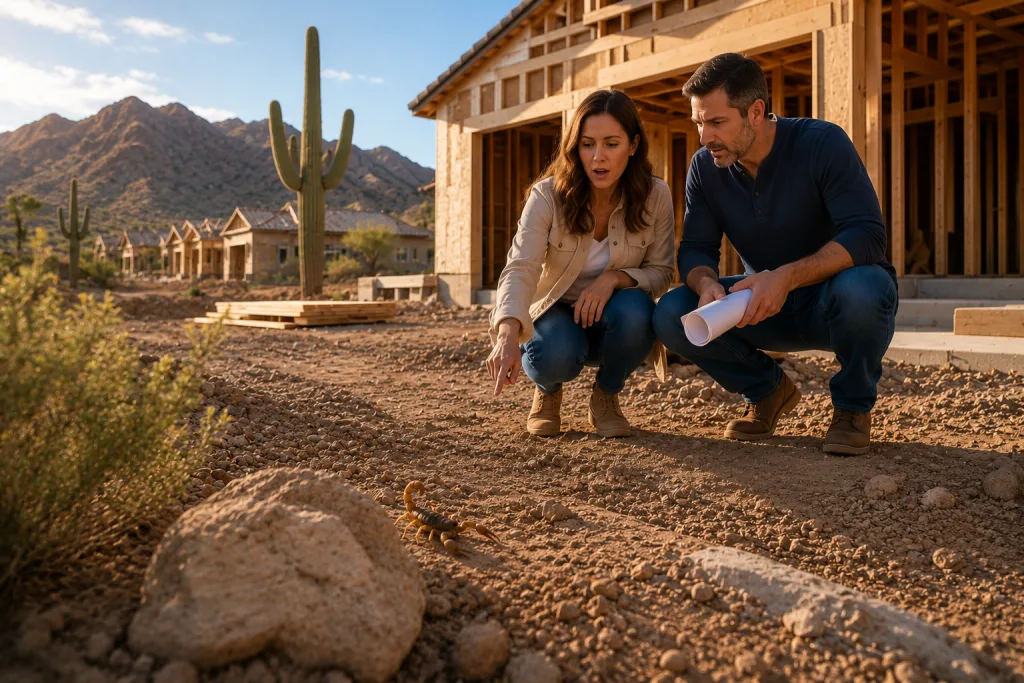
New development communities are often built right into Arizona scorpion territory. When land is cleared, soil is moved, walls are built, and landscaping goes in, scorpions can be pushed toward nearby homes.
So if you find a scorpion in a brand-new house, it does not mean the home was built poorly. It means the property may need scorpion protection built for desert conditions. For homeowners in Phoenix, Tucson, and surrounding Arizona communities, 520 Termite & Pest Solutions can help identify where scorpions are coming from and create a treatment plan to reduce activity around the home.
Why New Development Communities Attract Scorpions
Construction Disturbs Existing Scorpion Habitat
Scorpions often live in the Arizona desert areas long before homes are built. When builders clear land, grade lots, dig utility lines, and move soil, they disturb the places scorpions use for shelter. As that happens, scorpions may move toward finished homes, garages, patios, block walls, and landscaped yards.
Construction can also create new hiding spots. Retaining walls, debris, stacked materials, and gaps in block walls can all provide scorpions with cover. Activity may continue for months or years as nearby lots are graded, roads are built, drainage areas are constructed, and open desert remains near the community.
New Landscaping Creates Shelter and Food Sources
Finished landscaping can make a new yard more attractive to scorpions. Decorative rock, paver patios, artificial turf edges, irrigation boxes, gaps in block walls, dense shrubs, palm debris, and leaf litter provide scorpions with shaded places to hide.
Landscaping can also attract insects, which in turn attract scorpions. Homeowners can reduce pressure by trimming plants away from the home, avoiding overwatering, removing clutter near exterior walls, and checking irrigation valve boxes and meter boxes.
New Homes Still Have Entry Points
A new home is not automatically pest-proof. Scorpions can enter through gaps in garage doors, weep screeds, exterior pipe penetrations, cracks around stucco or block, dryer vents, door thresholds, window frames, and utility lines.
Garages are especially common entry points because small openings often exist along the sides or bottom of the door. Arizona bark scorpions can also climb block walls, stucco, trees, and other surfaces, which means sealing, exterior treatment, insect control, and regular monitoring are especially important in new communities.
What It Means When You See One Scorpion in a New Home
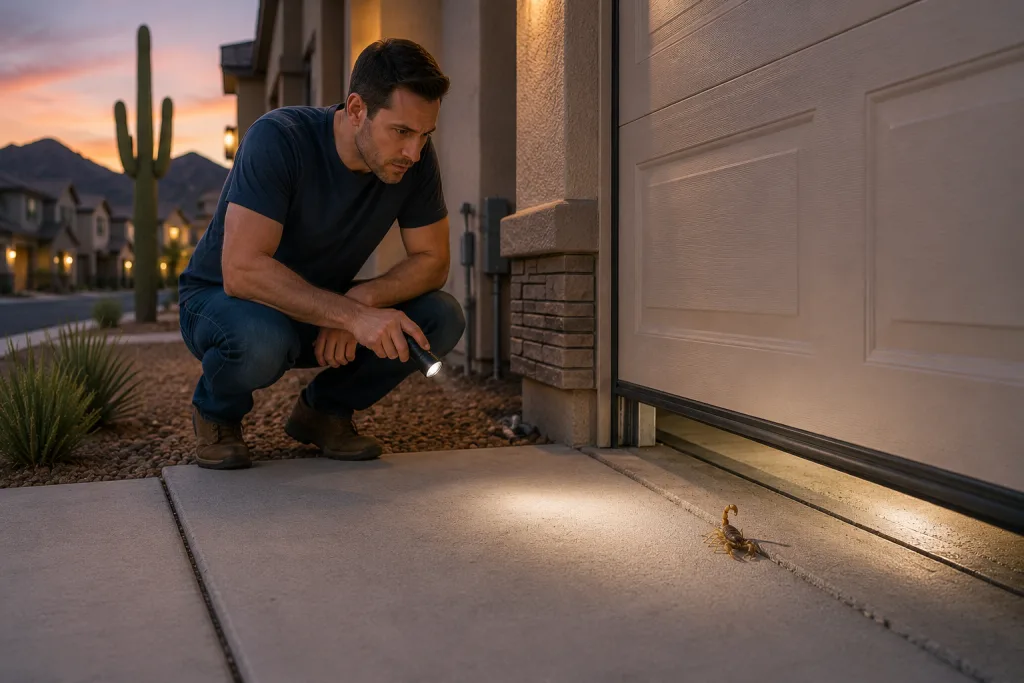
One Scorpion Can Signal Exterior Pressure
Seeing one scorpion in a new home does not always mean there is a major infestation inside the house. It may mean scorpions are active around the property, and one found a way in. In new development communities, this can happen when construction, landscaping, nearby open desert, or shared walls create steady scorpion pressure around the home.
When you find a scorpion, pay attention to the details:
- Where was it found?
- Was it alive or dead?
- Was it inside or outside?
- Was it near a door, drain, garage, wall, or window?
- Have neighbors reported scorpions too?
These details help identify patterns. A scorpion near the garage door may point to an exterior entry gap. A scorpion in a bathroom or laundry room may indicate plumbing issues, moisture, or nearby wall openings. A scorpion on the patio may suggest activity around landscaping, block walls, or exterior hiding spots.
Homeowners should track each sighting with simple notes:
- Date
- Room or location
- Time of day
- Whether it was inside or outside
- Weather changes
- Recent construction activity nearby
This information gives a pest control technician a better starting point during the inspection. It can also help determine if the problem is isolated or part of a larger pattern around the property.
Repeated Sightings Need Faster Action
One scorpion sighting should get your attention. Repeated sightings require faster action, especially when scorpions are appearing inside living areas. In a new Arizona community, ongoing construction and desert pressure can cause activity to persist unless the property is properly treated and monitored.
Warning signs include:
- Multiple scorpions in one week
- Scorpions inside bedrooms, bathrooms, kitchens, or living areas
- Scorpions near children’s rooms or play areas
- Sightings after a general pest treatment that was not designed for scorpion control
- Neighbors reporting frequent scorpion activity
- Scorpions appearing in the same room or area more than once
Repeated sightings usually call for a more complete plan. The goal is to reduce scorpion activity outside the home, limit the ways they can get inside, and reduce the insects that attract them.
New Community Pest Pressure Can Be Shared
Scorpions do not follow property lines. A homeowner may keep a clean yard and still see activity because scorpions are moving through the neighborhood from open land, common walls, washes, or nearby construction zones.
Common community-level contributors include:
- Desert washes
- Retention basins
- Common walls
- Greenbelts
- Vacant lots
- Ongoing nearby construction
- Builder-installed landscaping
- Shared block walls and drainage areas
For example, a homeowner may find scorpions in the garage while neighbors are seeing them on patios, block walls, and exterior doors. That pattern suggests neighborhood pest pressure, not just one isolated home issue.
In that situation, the homeowner still needs to protect their own property. Exterior treatment, entry-point checks, insect reduction, and monthly scorpion control can help reduce activity around the home, even when the surrounding community continues to exert pressure.
Where Scorpions Hide Around New Development Homes
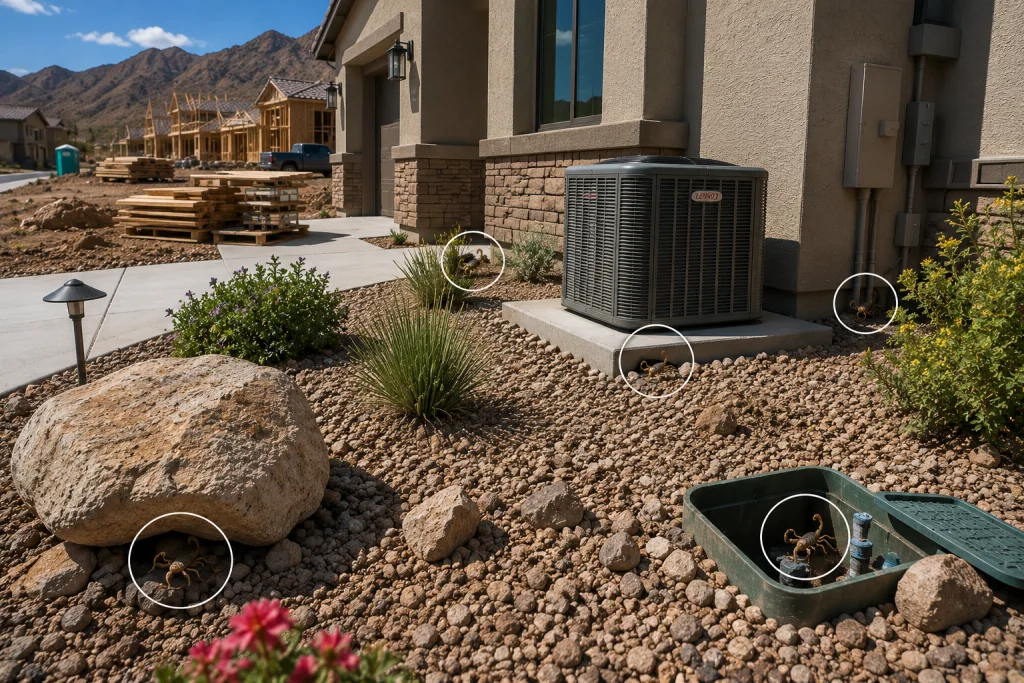
Exterior Hiding Spots
Scorpions spend much of the day in dark, protected spaces. Around new development homes, those hiding spots are often built right into the yard, patio, walls, and landscaping.
Homeowners should inspect areas such as:
- Under pavers
- Around the pool equipment
- Under patio furniture
- Inside block wall openings
- Around AC pads
- Beneath decorative rock
- Near irrigation boxes
- Around trash cans
- Under storage bins
- Near exterior lighting that attracts insects
These areas matter because they give scorpions darkness, cover, and easy access to prey insects. Decorative rock, block walls, paver edges, and irrigation areas can retain insects and moisture, making the area more active at night.
Garage and Storage Areas
Garages are among the most common places where homeowners find scorpions in new homes. Garage doors often have small gaps along the bottom, corners, or sides. Those openings may be large enough for scorpions to enter, especially when nearby lots, walls, or landscaping are already active.
Garages also create good hiding conditions. They are dark, warm, and often filled with stored items. Cardboard boxes, stacked materials, sports gear, tools, shoes, and holiday decorations can all give scorpions places to hide during the day.
Common garage risk factors include:
- Large door gaps
- Stored boxes
- Concrete expansion joints
- Clutter along the walls
- Access points leading into the interior of the home
Bathrooms, Kitchens, and Laundry Rooms
Homeowners are often surprised to find scorpions in bathrooms, kitchens, and laundry rooms. These areas can attract scorpions because they offer moisture, darkness, and small hiding spaces. Plumbing lines, cabinet gaps, drains, baseboards, and utility openings can all create places where scorpions may travel or hide.
Areas to check include:
- Sink cabinets
- Tub and shower areas
- Laundry drains
- Baseboards
- Utility openings
- Gaps near plumbing lines
- Spaces under appliances
- Wall openings behind fixtures
A scorpion in one of these rooms may be searching for moisture or following insects. It may also have entered through a nearby wall gap, plumbing penetration, or garage-adjacent area. Regular pest control, entry point sealing, and moisture management can help reduce activity in these vulnerable spaces.
How to Reduce Scorpions Around a New Home
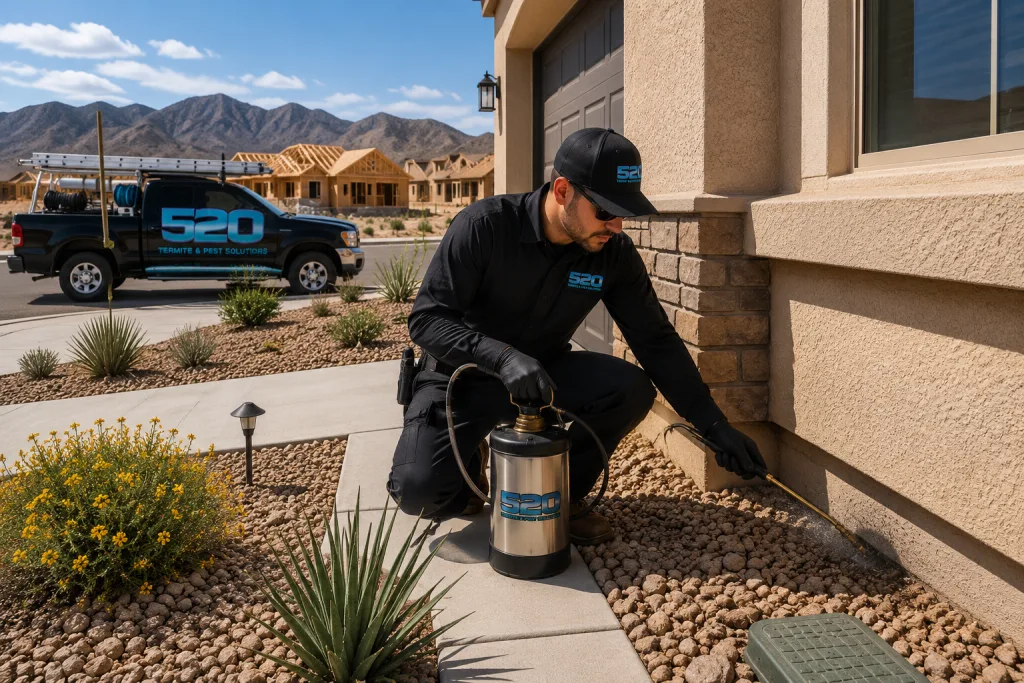
Start With Exterior Pest Control
Exterior pest control is the first line of defense against scorpions in a new Arizona home. Most scorpion activity starts outside, especially in new development communities where construction, landscaping, and nearby desert areas keep pests moving around the property.
A professional scorpion control service should focus on the areas where scorpions travel, hide, and enter the home, including:
- Foundation perimeter
- Block walls
- Garage thresholds
- Patio areas
- Eaves and entry points
- Landscape borders
- Pest harborage zones
- Areas near irrigation boxes, AC pads, and exterior storage
520 Termite uses EPA-approved insecticides tailored to environmental and structural variables for scorpion control. This matters because every property is different. A home next to open desert, a wash, or an active construction phase may need a different treatment approach than a home in the center of a completed neighborhood.
Exterior treatment helps reduce activity before scorpions get inside. It also gives the technician a chance to identify problem areas, such as wall gaps, high insect activity, landscape clutter, or moisture near the foundation.
Reduce the Insects Scorpions Eat
Scorpions are predators. They feed on insects, so a property with crickets, roaches, ants, beetles, and other pests can attract more scorpion activity. Reducing the food source is one of the most practical ways to make a new home less appealing to scorpions.
Homeowners should take steps to reduce insect activity around the home:
- Treat for crickets, roaches, ants, and other insects.
- Reduce exterior lighting that draws bugs.
- Keep trash bins sealed.
- Avoid standing water.
- Keep pet food indoors.
- Clean up food debris around patios and outdoor seating areas.
- Keep garage and patio areas free from clutter.
A patio with lights on every night may draw insects toward doors, windows, and exterior walls. Once insects gather there, scorpions may follow. Reducing insect activity near the home lowers the likelihood of scorpions hunting near entry points.
Seal the Most Common Entry Points
New homes can still have small openings that allow scorpions to get inside. Sealing those gaps can reduce indoor sightings, especially when combined with exterior pest control.
A realistic sealing plan should include:
- Add or replace door sweeps.
- Seal gaps around plumbing and utility lines.
- Repair damaged weatherstripping.
- Check window screens.
- Seal gaps around garage doors.
- Inspect dryer vents and exterior wall penetrations.
- Look for cracks around stucco, block walls, and foundation edges.
- Check gaps around exterior doors and thresholds.
Adjust Landscaping Near the Home
Landscaping can either reduce scorpion pressure or make the home more attractive to pests. In new development communities, builder landscaping often includes rocks, shrubs, drip irrigation, and young plants near the home. These features may look clean at move-in, but they need routine maintenance once the homeowner settles in.
Homeowners can reduce scorpion hiding areas by making these changes:
- Trim shrubs away from walls.
- Keep branches off the roofline.
- Pull rock and debris back from the foundation when possible.
- Avoid dense groundcover near doors.
- Keep irrigation controlled.
- Avoid wet soil against the home.
- Clean up palm fronds, leaf litter, and yard debris.
- Keep storage bins, tools, and patio items away from exterior walls.
Dense vegetation, decorative rocks, irrigation runoff, and yard debris can create cool, protected areas where scorpions and insects hide during the day. Keeping the area around the home cleaner, drier, and more open makes it harder for scorpions to settle close to doors, windows, garages, and patios.
Monthly Scorpion Control in New Communities

Monthly Service Keeps Pressure Lower
Monthly scorpion control helps keep pressure lower by treating the areas where scorpions are most likely to travel, hide, and hunt. This is especially useful in new development communities where conditions keep changing from one month to the next.
Monthly service can support:
- Re-treatment of key zones around the property
- Monitoring of scorpion activity
- Adjustments based on recent sightings
- Treatment for insects that scorpions eat
- Early identification of problem areas
- Review of garage, patio, block wall, and landscape conditions
520 Termite offers monthly protection against scorpion issues because ongoing service provides homeowners with a stronger defense than a one-time treatment. If scorpions continue moving in from nearby lots, washes, common walls, or active construction areas, regular service helps reduce activity before it becomes a bigger indoor problem.
Professional Inspection Finds What Homeowners Miss
Scorpions are good at hiding. A homeowner may see one in a bathroom, garage, or laundry room without knowing where it came from. A professional inspection helps connect the sighting to the likely source.
A technician may evaluate:
- Entry points
- Wall gaps
- Scorpion hiding zones
- Landscape risk areas
- Moisture sources
- Insect activity
- Garage and patio conditions
- Block walls, irrigation boxes, and exterior storage areas
For example, a homeowner may keep finding scorpions in the laundry room. A professional inspection may trace the activity to a garage gap, plumbing penetration, or exterior wall condition near that part of the home. Once the likely access point is identified, the treatment plan can focus on the areas that matter most.
In a new development community, monthly protection and regular inspections give homeowners a practical way to stay ahead of scorpion activity as the neighborhood continues to grow.
Why Choose 520 Termite & Pest Solutions for Scorpion Control
Arizona Experience
520 Termite & Pest Solutions is a family-owned, full-service pest control company that has served Arizona since 1967. The company provides pest control services in Phoenix, Tucson, and other Southern Arizona cities, giving homeowners access to local expertise on pests common in desert communities.
That local experience matters in new development neighborhoods. Scorpion activity can vary by community, season, construction phase, and surrounding land conditions. A home near open desert, a wash, or an unfinished phase of construction may face different pressure than a home in a fully developed area.
Scorpion-Specific Treatment Plans
Scorpion control should be based on the property, not a one-size-fits-all treatment. 520 Termite & Pest Solutions uses treatment plans tailored to the home, the surrounding environment, and structural conditions that may contribute to scorpion activity.
A scorpion-specific treatment plan may include:
- Treatments tailored to the property
- EPA-approved products
- Attention to structural and environmental conditions
- Monitoring for ongoing activity
- Recommendations based on recent sightings
- Service adjustments when activity changes
A strong scorpion control plan should address more than the scorpions homeowners happen to see.
Monthly Protection for Long-Term Control
Monthly protection is a strong fit for new communities because conditions around the home can keep changing. Ongoing construction can disturb scorpions and change their movement patterns. Scorpions may move in from neighboring lots, open land, washes, retention areas, common walls, or nearby landscaped yards.
A New Home Still Needs Scorpion Protection
Seeing scorpions in a new development community is common in Arizona. New neighborhoods are often built near desert land where scorpions already live. When construction crews clear lots, move soil, install utilities, build walls, and add landscaping, that activity can disturb desert pests and push them toward finished homes.
A clean, newly built house can still have scorpion pressure. Small gaps around garage doors, vents, plumbing lines, windows, and utility openings can give scorpions a way inside. Decorative rock, irrigation, block walls, paver patios, and dense plants can also create shelter, moisture, and insect activity around the home.
Seeing scorpions in your new home or neighborhood? Contact 520 Termite & Pest Solutions today to schedule a scorpion inspection and start a monthly protection plan built for Arizona homes.”
FAQs
Why am I seeing scorpions in a brand-new house?
New construction can disturb desert habitat and push scorpions toward finished homes. They may move in from graded lots, open desert, block walls, or nearby construction areas.
New homes can still have gaps around garages, doors, plumbing, vents, and utility lines.
Does one scorpion mean I have an infestation?
Not always. One scorpion may mean there is activity outside, and one has found a way in.
Repeated sightings, indoor sightings, or reports from neighbors suggest stronger pest pressure and warrant inspection.
Are scorpions common in new Arizona communities?
Yes. Scorpions are common in new communities near desert land, washes, vacant lots, or active construction.
Phoenix, Tucson, and surrounding areas have conditions that support scorpion activity.
Where do scorpions usually enter a home?
Common entry points include:
- Garage door gaps
- Door thresholds
- Plumbing openings
- Exterior wall penetrations
- Vents
- Window frames
- Foundation or stucco cracks
Why do I find scorpions in bathrooms or laundry rooms?
Bathrooms and laundry rooms offer moisture, darkness, and access points around plumbing, drains, cabinets, baseboards, and utility openings.
What attracts scorpions to my yard?
Scorpions are attracted by insects, moisture, shelter, and clutter.
Common problem areas include decorative rock, irrigation boxes, gaps in block walls, dense plants, patio furniture, yard debris, and exterior lights that attract insects.
If you or a family member is stung, Banner Health’s bark scorpion guide outlines symptoms and when to seek medical attention.