
Hearing a faint buzzing behind your walls or noticing bees flying in and out of the same spot on your home is not something to brush off. In Phoenix and surrounding areas, this is often the first sign of a growing hive hidden inside your structure. What starts as a small entry point can quickly turn into thousands of bees building comb, storing honey, and expanding deeper into your walls.
Arizona’s climate makes homes especially attractive to bees. The heat drives them to cooler, insulated spaces, and wall voids offer the protection they need to thrive. Once they settle in, they do not leave on their own. The longer the problem sits, the larger the colony becomes, increasing the risk of structural damage, indoor infestations, and dangerous encounters.
This is not a situation where a quick spray or DIY fix solves the problem. Without completely removing the hive and honeycomb, the issue almost always comes back, often worse than before.
In this guide, you will learn exactly why bees move into walls, how to confirm if you have an infestation, what risks you are dealing with, and the right way to handle it. If you are already seeing or hearing signs, the priority is simple. Act quickly and get it handled properly.
Why Bees Are Nesting Inside Your Walls in Arizona
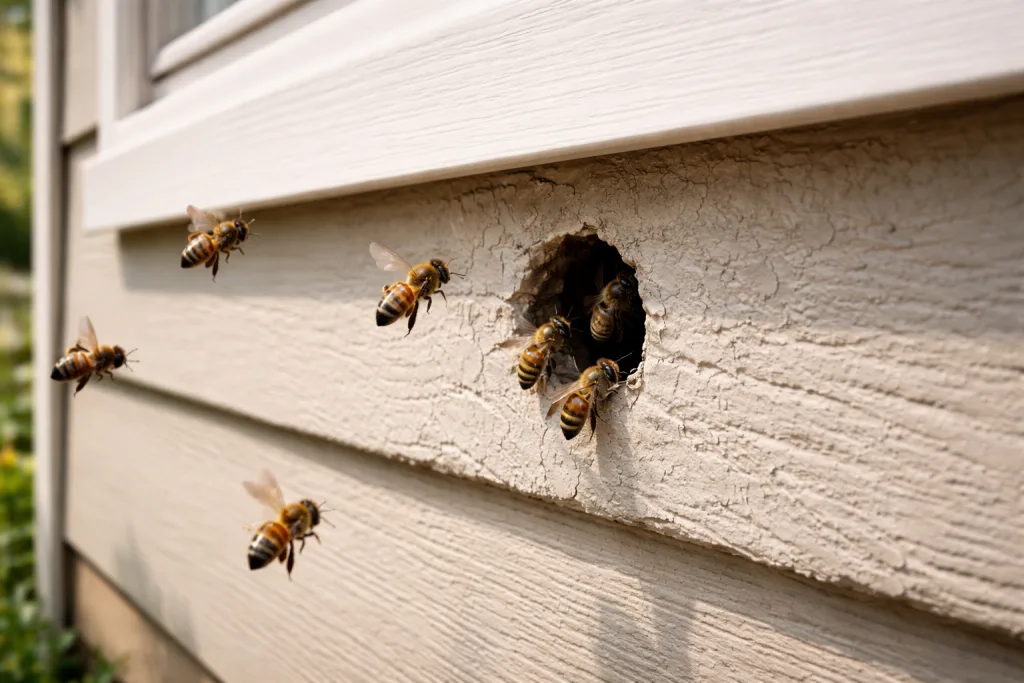
Ideal Conditions Found in Phoenix Homes
Phoenix homes create the exact environment bees are looking for when they establish a colony. Wall voids act as a ready-made shelter that protects the hive from both the harsh desert climate and outside threats.
- Protection from heat and predators
- Exterior temperatures in Arizona regularly exceed what bees can tolerate
- Walls provide insulation that keeps internal temperatures more stable
- Enclosed spaces reduce exposure to predators and environmental stress
- Dark, enclosed space for hive development
- Bees naturally seek cavities that mimic tree hollows
- Wall voids give them room to build comb and expand without disruption
Arizona’s climate accelerates the problem once bees move in.
- Extreme heat drives bees to insulated areas
- During peak summer, exposed hive locations become unlivable
- Homes offer one of the most reliable alternatives
- Long seasons allow colonies to grow larger than in other regions
- Mild winters mean colonies stay active longer
- More time to reproduce leads to larger, more established infestations
Common Entry Points Around Homes
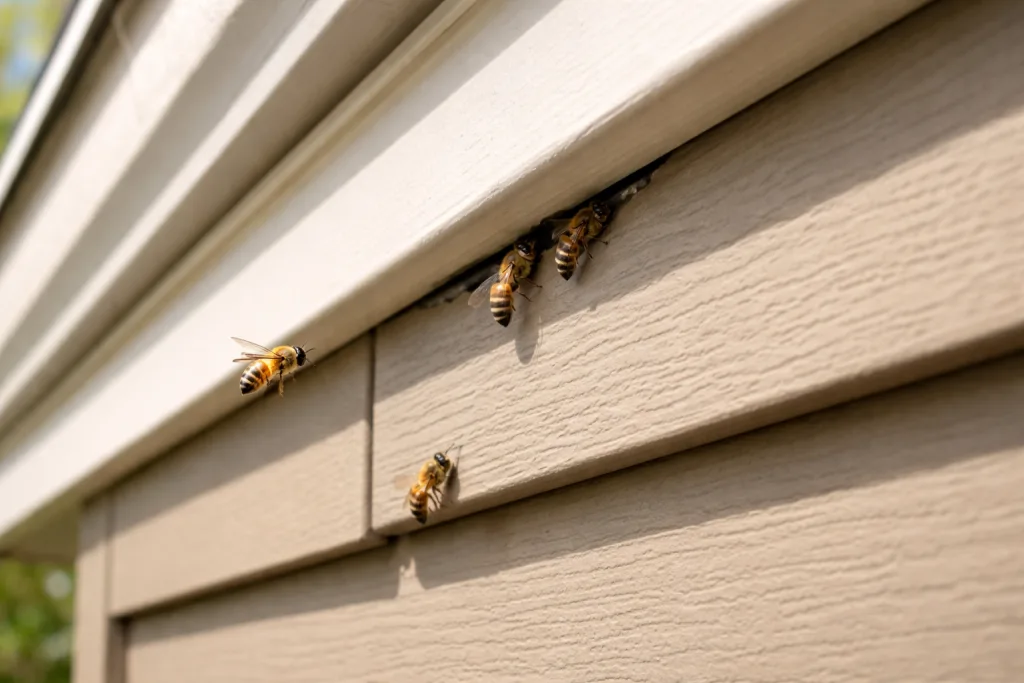
Bees do not need a large opening to get inside. Most infestations start with a gap that homeowners never notice.
- Small gaps and cracks
- Rooflines and eaves where materials meet
- Stucco cracks that develop over time
- Utility penetrations such as AC lines, cable entry points, and vents
- Openings near soffits, chimneys, or attic vents
- These areas often have weak sealing or aging materials
- Warm air escaping from the home can attract bees looking for stable environments
Once a few scout bees find a suitable entry point, the colony follows quickly.
Types of Bees You’re Likely Dealing With
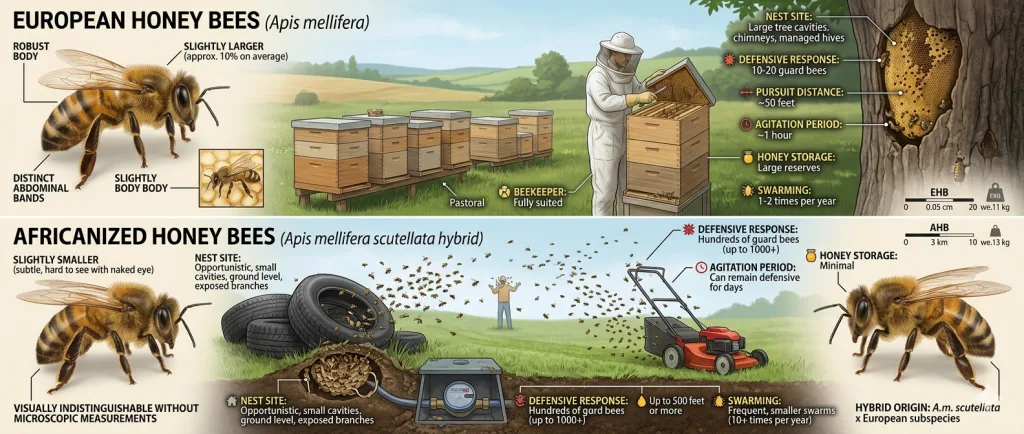
Not all bee infestations are the same, and identifying the species matters for removal and safety.
- Africanized honey bees (common in Arizona)
- Known for more defensive and aggressive behavior
- More likely to react quickly to disturbances
- Common throughout Phoenix and the surrounding areas
- European honey bees
- Less aggressive but still capable of building large colonies inside walls
- Often mistaken for Africanized bees without proper inspection
- Importance of proper identification before removal
- Determines the safest and most effective removal approach
- Impacts how the hive is handled and whether relocation is possible
- Reduces risk to homeowners, pets, and technicians
Understanding why bees choose your walls is the first step. The next step is recognizing the signs before the problem grows out of control.
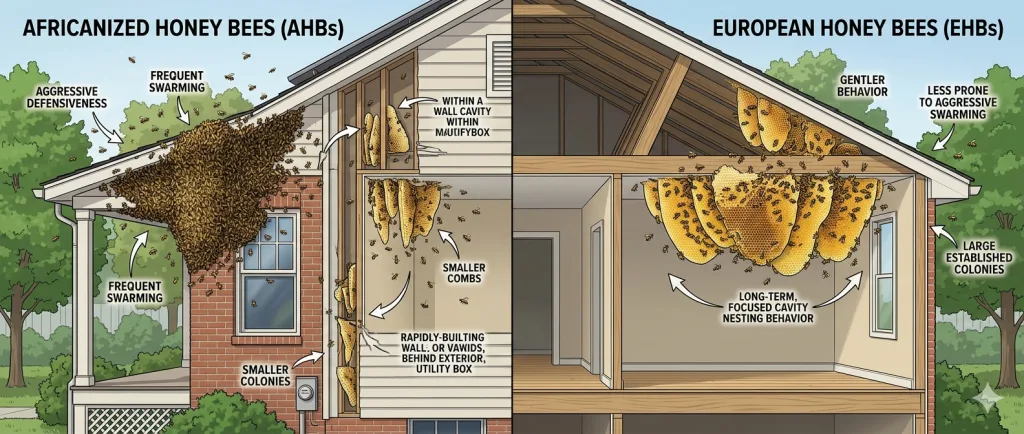
Signs You Have Bees Living in Your Walls
Visible Bee Activity Outside the Home
The most obvious early sign is consistent bee movement around a specific area of your house. This is where most infestations start to reveal themselves.
- A steady stream of bees entering and exiting one location
- Bees repeatedly use the same small opening
- Activity stays focused on one crack, vent, or seam
- Increased activity during daylight hours
- Bees are most active when the sun is up
- Traffic tends to peak mid-morning through late afternoon
- Bees are hovering around a specific section of the house
- You may see clusters forming near rooflines, eaves, or walls
- This usually indicates the main entry point to the hive
If you notice consistent movement in one spot, there is a high chance a colony has already established itself inside.
Sounds Coming From Inside Walls
Once the hive grows, you may start hearing it before you see additional signs.
- Faint buzzing or humming
- Sound comes from inside walls, ceilings, or attic areas
- Often mistaken for electrical noise or airflow
- More noticeable during quiet times
- Early mornings and evenings make the sound easier to hear
- Larger colonies produce a more constant, louder hum
This is a strong indicator that the hive is not just starting; it is already active and expanding.
Physical Indicators Inside the Home
As the infestation grows, it begins to affect the interior of your home.
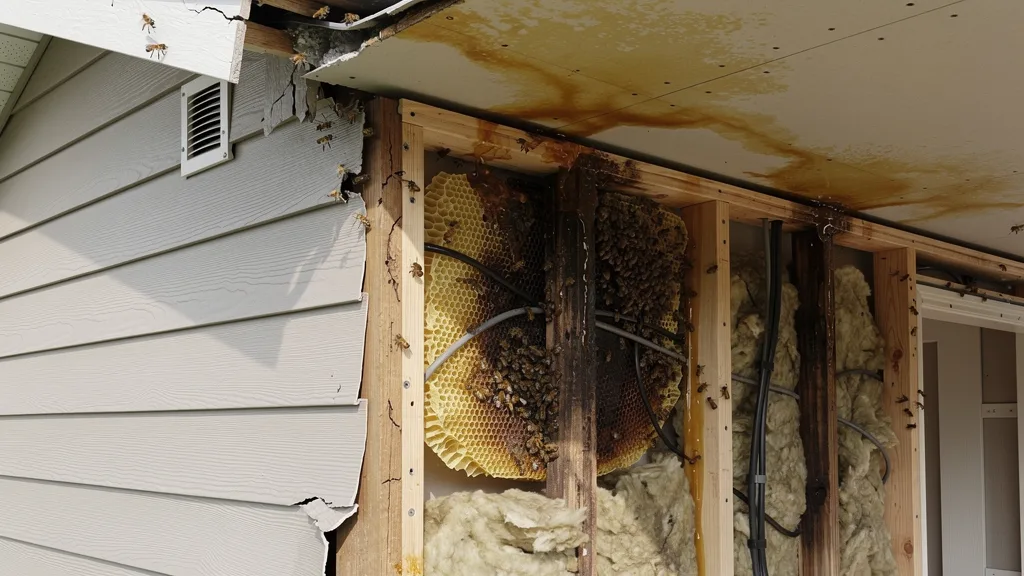
- Honey or wax seeping through the drywall
- Visible stains may appear on walls or ceilings
- Can worsen as temperatures rise and honey softens
- Sticky or discolored patches
- Yellow or brown spotting is common
- Areas may feel tacky to the touch
- Unusual sweet smell in certain areas
- Honey and wax produce a noticeable scent
- Often concentrated near the hive location
These signs mean the problem has progressed beyond the early stages and is starting to impact your structure.
Increased Bee Encounters Indoors
When bees are inside your walls, it is common for some to make their way into your living space.
- Bees appearing inside your home without a clear entry
- Often seen near vents, light fixtures, or ceiling seams
- Can happen even if doors and windows remain closed
- Dead bees near windows or light fixtures
- Bees are drawn to light once inside
- You may find clusters in window sills or near bulbs
At this point, the infestation is no longer contained to the exterior. Immediate action is needed to prevent further spread and reduce risk.
What Happens If You Ignore a Bee Infestation
Rapid Colony Growth
A bee problem does not stay small. Once a colony is established inside your walls, it expands quickly and becomes harder to control.
- A single hive can grow to thousands of bees
- Colonies scale fast once the queen is established
- More bees means more activity, noise, and risk
- The queen continues laying eggs daily
- The population increases every day without interruption
- Growth does not slow unless the hive is removed
- Expansion deeper into the wall cavities
- Bees continue building the comb further into the structure
- The longer it sits, the more invasive the infestation becomes
What starts as a minor issue can turn into a full-scale infestation in a short period.
Structural Damage Risks
Beyond the bees themselves, the damage they leave behind can impact your home.
- Honeycomb buildup adds weight inside walls
- Large hives can stretch across multiple wall sections
- Structural strain increases over time
- Honey saturation can:
- Damage drywall and insulation
- Cause staining and softening of materials
- Lead can lead to costly repairs if left untreated
- Attract other pests like ants and rodents
- Honey becomes a food source for secondary infestations
- One problem can quickly turn into multiple pest issues
Ignoring the hive allows damage to continue even if bee activity seems to slow.
Safety Concerns for Your Family
The longer bees remain inside your home, the higher the risk of dangerous encounters.
- Higher chance of stings
- An increased population raises the likelihood of contact
- Bees may enter living spaces more frequently
- Increased aggression if the colony is disturbed
- Vibrations, noise, or attempts to remove them can trigger defensive behavior
- Africanized bees in Arizona are especially reactive
- Greater risk for children and pets
- Pets may unknowingly provoke bees
- Children are more vulnerable to multiple stings
This shifts from a nuisance to a real safety issue, especially in active households.
Long-Term Property Issues
Even after bees leave or are killed improperly, the problem is not over.
- Residual honey attracts future infestations
- Leftover comb and honey draw new colonies
- The same location becomes a repeated problem
- Re-infestation if the hive is not fully removed
- Partial removal leads to recurring activity
- Hidden areas continue to cause issues behind walls
The only way to stop the cycle is complete removal and proper cleanup. Anything less keeps the problem alive.
What Professional Bee Removal Looks Like
Inspection and Identification
The process starts with a detailed inspection to understand exactly what you’re dealing with. This step determines how the removal is handled and prevents incomplete work.
- Locating the hive inside the walls
- Pinpointing the exact area of activity using visual cues and sound
- Identifying how far the hive extends within the structure
- Determining colony size and species
- Estimating the number of bees and the level of infestation
- Identifying whether they are Africanized or European honey bees
- Identifying entry points and damage areas
- Finding where bees are entering and exiting
- Assessing any visible or hidden damage caused by the hive
This step ensures the removal is targeted and not guesswork.
Safe Removal Process
Once the situation is confirmed, the focus shifts to safely and effectively removing the bees.
- Use of protective equipment and specialized tools
- Full protective gear to prevent stings
- Professional-grade equipment designed for controlled removal
- Options based on the situation
- Live bee removal and relocation when conditions allow
- Targeted treatment if relocation is not possible or safe
- Controlled approach to avoid agitation
- Minimizing disturbance to reduce aggressive behavior
- Keeping the process contained to protect the household
This is where experience matters. Improper handling can escalate the situation quickly.
Hive and Honeycomb Extraction
Removing the bees is only part of the job. The real problem is the hive itself.
- Opening affected wall areas
- Accessing the hive directly instead of treating from the outside
- Keeping cuts precise to limit unnecessary damage
- Removing all comb, honey, and residue
- Full extraction prevents future issues
- Eliminates the source of odors and secondary infestations
- Preventing future attraction
- Cleaning the area thoroughly
- Removing all scent markers that attract new colonies
Skipping this step is one of the main reasons infestations return.
Repair and Prevention Steps
After removal, the focus shifts to making sure it doesn’t happen again.
- Sealing entry points
- Closing gaps in rooflines, vents, and wall penetrations
- Reinforcing vulnerable areas
- Recommendations for repairs
- Addressing drywall, insulation, or structural damage
- Guidance on restoring affected sections properly
- Optional preventative treatments
- Treatments to deter future bee activity
- Ongoing inspection plans if the property is high-risk
A complete job does not end with removing the bees. It includes making sure your home is no longer an easy target.
How Long Does Bee Removal Take?
Timeline Breakdown
The timeline depends on how early the problem is caught and how large the colony has become. In most cases, the process starts quickly and moves based on the complexity of the infestation.
- Inspection: same-day or next-day service
- 520 Termite & Pest Control can typically assess the issue within 24 hours
- Initial inspection identifies hive location, size, and access points
- Removal process
- Small hives: a few hours
- Early-stage infestations can often be handled in a single visit
- Minimal wall access and faster cleanup
- Larger infestations: multiple visits
- Established colonies require more time to safely remove bees and extract the comb
- Additional visits may be needed for full cleanup and monitoring
- Small hives: a few hours
Factors That Affect Timing
No two bee infestations are identical. Several variables determine how long the removal will take.
- Size of the colony
- Larger colonies require more time for safe removal and complete extraction
- More bees mean more comb and honey to remove
- Location within the structure
- Easy-access areas like exterior walls are faster to handle
- Hives deep inside walls, attics, or ceilings take longer
- Accessibility of the hive
- Limited access may require more precise wall openings
- Complex structures can slow down the process
What Homeowners Should Expect
Understanding the process up front helps set expectations and reduce surprises.
- Temporary noise or wall access
- Some cutting into drywall or exterior areas may be required
- Work is kept as controlled and minimal as possible
- Clear communication from the 520 Termite team
- You will know what is being done and why
- Timeline and next steps are explained before and during the job
- Follow-up if needed
- Larger infestations may require a return visit
- Ensures the hive is fully removed and no activity remains
The key takeaway is simple. Smaller problems get handled fast. Larger infestations take more time, but a proper job prevents repeat issues and higher costs later.
How to Prevent Bees from Returning
Seal and Secure Your Home
The most effective way to stop future infestations is to eliminate access points before bees find them.
- Close gaps around:
- Rooflines where materials meet or shift over time
- Vents that are not properly screened or sealed
- Utility openings such as AC lines, cable entry points, and piping
- Focus on small openings
- Bees only need a tiny gap to get inside
- Even minor cracks in stucco or siding can become entry points
- Reinforce vulnerable areas
- Soffits, eaves, and attic vents are common problem spots
- Regular sealing and maintenance reduces risk long-term
Regular Property Inspections
Catching bee activity early prevents a small issue from turning into a full infestation.
- Check for early signs of bee activity
- Watch for bees hovering or scouting around your home
- Look for consistent movement near one specific area
- Especially during peak seasons
- Spring and early summer are when colonies are most active
- Increased temperatures push bees to seek shelter inside structures
- Walk your property routinely
- Pay attention to rooflines, exterior walls, and shaded areas
- Early detection makes removal faster and less invasive
Reduce Attractants
Your home becomes less appealing to bees when key attractants are removed.
- Eliminate standing water sources
- Birdbaths, leaky hoses, and irrigation issues can draw bees in
- Bees need water, especially in the Arizona heat
- Maintain landscaping away from the structure
- Overgrown plants near walls create shelter and access points
- Trim back trees and shrubs touching the home
- Limit sheltered voids
- Open cavities or neglected exterior areas increase the risk
- Keep the exterior clean and maintained
Ongoing Pest Control Support
Preventing bees long-term requires consistency, not just a one-time fix.
- Routine inspections from 520 Termite & Pest Control
- Professional eyes catch issues homeowners miss
- Regular service helps identify risks before they become infestations
- Early intervention before colonies grow
- Addressing activity at the first sign prevents major problems
- Reduces cost, damage, and safety concerns
The goal is simple. Make your home a difficult place for bees to enter and an unappealing place for them to stay.
Take Action Before the Problem Gets Worse
Bees inside your walls are not a small or temporary issue. Once a colony settles in, it continues to grow, spread, and create damage behind the scenes. What might seem like a minor nuisance today can quickly turn into a serious problem involving structural damage, safety risks, and costly repairs.
The only way to fully solve the problem is with professional removal that includes eliminating the hive, honeycomb, and any conditions that allow bees to return. Anything less leaves the door open for the issue to persist or recur.
If you are hearing buzzing, seeing consistent bee activity, or noticing any of the warning signs, now is the time to act.
Contact 520 Termite & Pest Control for a professional inspection and fast response. Their team understands how to handle bee infestations safely, remove the entire hive, and prevent future problems.
FAQs
How do bees get inside walls?
- Through small cracks, vents, and roofline gaps
Are bees in the walls dangerous?
- Yes, especially Africanized bees are common in Arizona
Can bees go away on their own?
- Rarely. Colonies grow unless professionally removed
Will removing bees damage my home?
- Minimal, controlled access is used and explained beforehand
Do you remove the entire hive or just the bees?
- Full removal, including honeycomb, is necessary to prevent future issues
How quickly can you respond in Phoenix?
- Same-day or next-day service in most cases
Most bee stings are minor, but some people have serious allergic reactions; see Mayo Clinic’s bee sting symptoms and causes guide for details.