
Scorpions are part of life in Arizona, especially in Phoenix and the surrounding areas. If you’ve seen one inside your home or creeping across your patio at night, you’re not alone. The first reaction for most homeowners is to look for something simple, safe, and natural to keep them away. That’s where natural scorpion repellents come in.
There’s no shortage of advice online. Essential oils, vinegar sprays, powders, and DIY mixes all claim to solve the problem. Some of them can help in small ways. Most don’t deliver the kind of control people expect. The gap between what’s advertised and what actually works is where homeowners get stuck dealing with the same issue over and over.
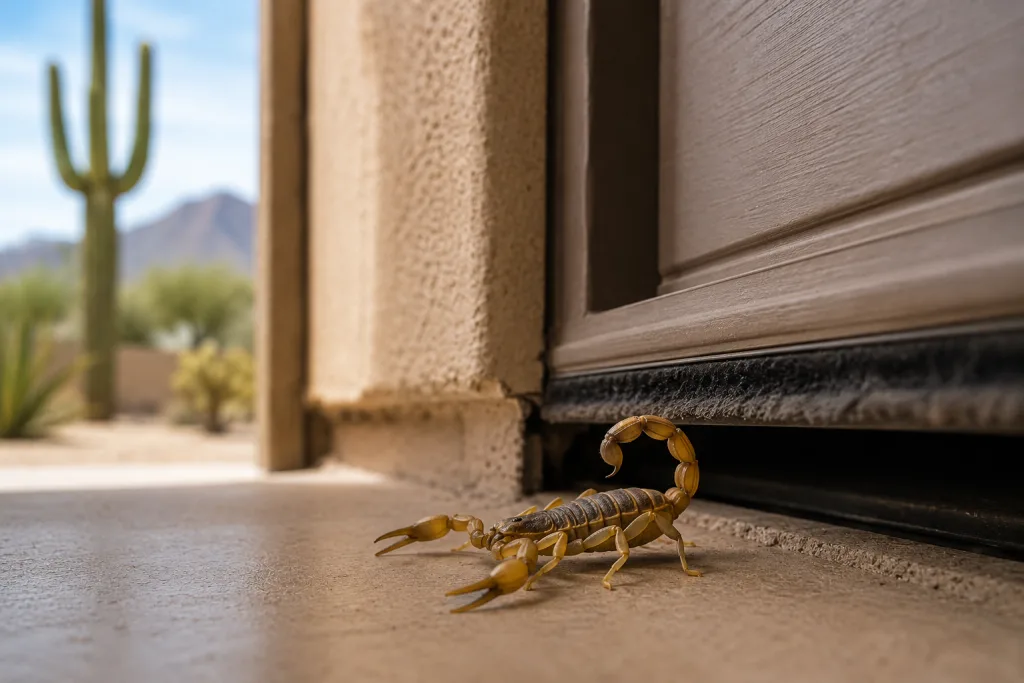
Why Scorpions Are So Hard to Repel
Understanding Scorpion Behavior in Arizona
Scorpions aren’t random pests. They’re built to survive in the exact conditions most Phoenix-area homes create. If you don’t understand how they operate, no repellent, natural or otherwise, is going to hold up.
- Nocturnal hunting patterns: Scorpions stay hidden during the day and come out at night to hunt. That means you rarely see the real level of activity. What shows up occasionally indoors is often just a small fraction of what’s happening outside.
- Attraction to moisture, shade, and food sources: They gravitate toward areas with moisture and insect attractants. Irrigated landscaping, block walls, rock beds, and shaded patios create ideal environments. If crickets or roaches are present, scorpions will follow.
- Ability to flatten bodies and squeeze into tight gaps: They don’t need much space to get inside. Small cracks, gaps under doors, and openings in block walls are all entry points. Homes in Arizona, especially with weep holes and stucco construction, give them easy access.
Why “Repellents” Often Fall Short
Most natural repellents are built around scent. That’s a problem when you’re dealing with a pest that doesn’t rely on smell the way insects do.
- Scorpions rely more on vibration than scent: They detect movement through the ground and air. Strong smells might be noticeable to humans, but they don’t consistently disrupt scorpion behavior.
- A thick exoskeleton reduces sensitivity to many substances: Their outer shell limits how much contact-based products affect them. Many sprays that work on ants or roaches don’t penetrate or irritate scorpions the same way.
- They don’t groom like insects, so contact repellents are less effective: Insects often ingest or spread substances across their bodies through grooming. Scorpions don’t do that, which reduces the impact of powders and surface treatments unless there’s direct, prolonged contact.
What This Means for Homeowners
This is where most people get it wrong. They expect a spray or natural solution to act like a barrier. That’s not how scorpion control works.
- Repellents alone rarely solve the problem: You might see a short-term reduction, but activity comes back because the source hasn’t been addressed.
- Control requires a combination of exclusion, habitat reduction, and treatment
The real strategy is layered:- Block entry points so they can’t get inside
- Remove the conditions that attract them outside
- Reduce the insect population that they feed on
- Use targeted treatments where needed
If you skip those steps and rely on repellents alone, you’re treating symptoms, not the problem.
Popular Natural Scorpion Repellents (What People Use)
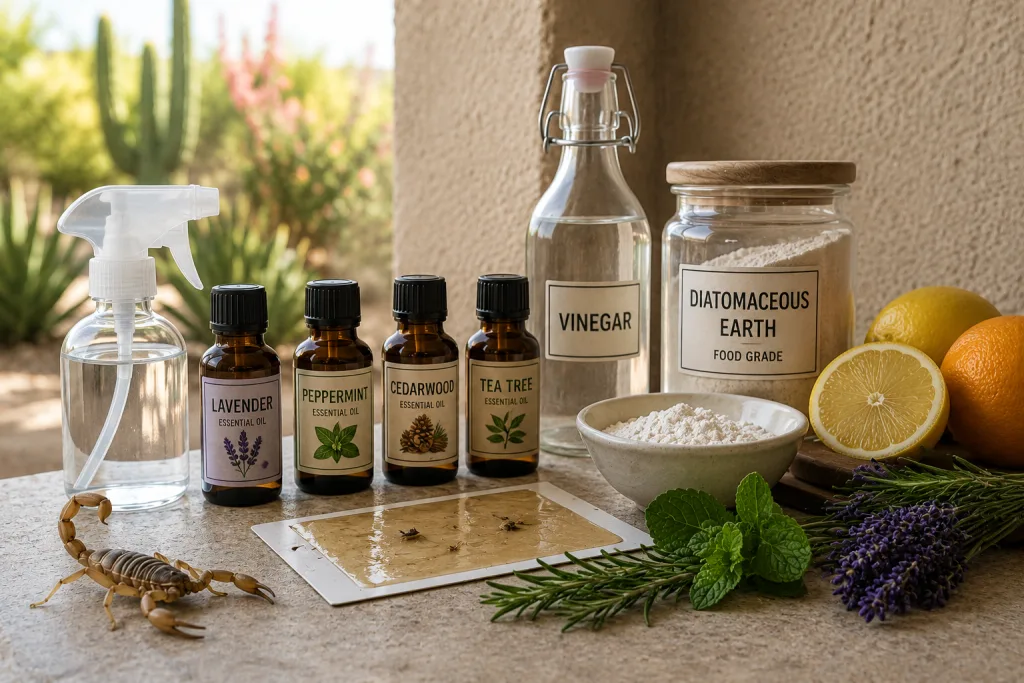
Essential Oils
Essential oils are one of the most common “natural” solutions homeowners try first. They’re easy to find, simple to mix, and marketed heavily as pest deterrents.
- Lavender oil
- Cedarwood oil
- Peppermint oil
- Tea tree oil
Talking points to cover:
- Common DIY spray recipes
- Mixing essential oils with water and sometimes vinegar or alcohol
- Typical ratios like 10 to 20 drops per spray bottle
- Shaken and reapplied frequently since oils separate and break down quickly
- Where people apply them
- Along baseboards inside the home
- Around door thresholds and window frames
- On patios, outdoor seating areas, and garage edges
- Near known entry points like cracks or utility penetrations
What to emphasize in the blog:
- These are used more for scent-based deterrence than actual control
- Application consistency matters, but most homeowners don’t maintain it long enough
Diatomaceous Earth
Diatomaceous earth is one of the few natural products that can physically affect scorpions rather than just attempt to repel them.
- Natural powder made from fossilized algae
- Works by damaging the outer layer of pests, leading to dehydration
Where and how it’s used:
- Applied along baseboards indoors in dry areas
- Sprinkled into cracks, crevices, and wall voids
- Used around the perimeter of the home and yard edges
- Commonly placed near garage walls and storage areas
Key points to highlight:
- Must stay dry to remain effective
- Needs direct contact with the scorpion to work
- Easily disrupted by cleaning, wind, or moisture outdoors
Citrus and Vinegar Solutions
These are simple, low-cost DIY options that homeowners often try first.
- Homemade sprays using lemon, orange, or vinegar
- Sometimes combined with water or essential oils
Typical usage:
- Sprayed along indoor baseboards
- Applied near entry points and windows
- Used in kitchens, bathrooms, and garages
What to explain clearly:
- These solutions rely on a strong scent rather than any lasting control mechanism
- Effects are short-lived and require constant reapplication
- Limited impact on actual scorpion behavior
Sticky Traps (Non-toxic control)
Sticky traps aren’t a repellent, but they’re a key part of most “natural” strategies because they don’t involve chemicals and provide visible results.
- Flat adhesive traps placed in high-traffic areas
- Capture scorpions as they move through the home
Where they’re most effective:
- Along walls in garages
- Inside closets and storage areas
- Behind furniture and near baseboards
- Around doorways and entry points
Why they matter:
- Help monitor activity levels and identify problem areas
- Can reduce small populations over time
- Give homeowners a clearer picture of how often scorpions are entering the home
Important distinction to make:
- Traps don’t prevent scorpions from entering
- They are a detection and reduction tool, not a standalone solution
Do Natural Repellents Actually Work?
Some natural methods can help, but only in specific conditions and usually as part of a larger plan.
- Diatomaceous earth
- Can kill scorpions on contact when they pass through it
- Works best in dry, undisturbed areas like garages, wall voids, and along interior edges
- Loses effectiveness quickly if exposed to moisture or frequent movement
- Sticky traps
- Useful for detecting where scorpions are active
- Can reduce small numbers over time by capturing them
- Help identify entry points and problem zones inside the home
These are the only “natural” options that consistently produce measurable results, and even then, they’re limited. Most other natural repellents fall into this category. They may give the impression of control without actually reducing the problem.
- Essential oils
- Strong scents can create short-term avoidance in some cases
- Effects fade quickly as the scent dissipates
- Require constant reapplication to maintain any level of deterrence
- Vinegar and citrus sprays
- Rely entirely on smell rather than any physical impact
- Break down quickly after application
- No consistent evidence of long-term effectiveness against scorpions
These options tend to be overused because they’re easy and feel proactive, but they don’t address why scorpions are there in the first place.
The Bigger Problem: Why Scorpions Keep Coming Back
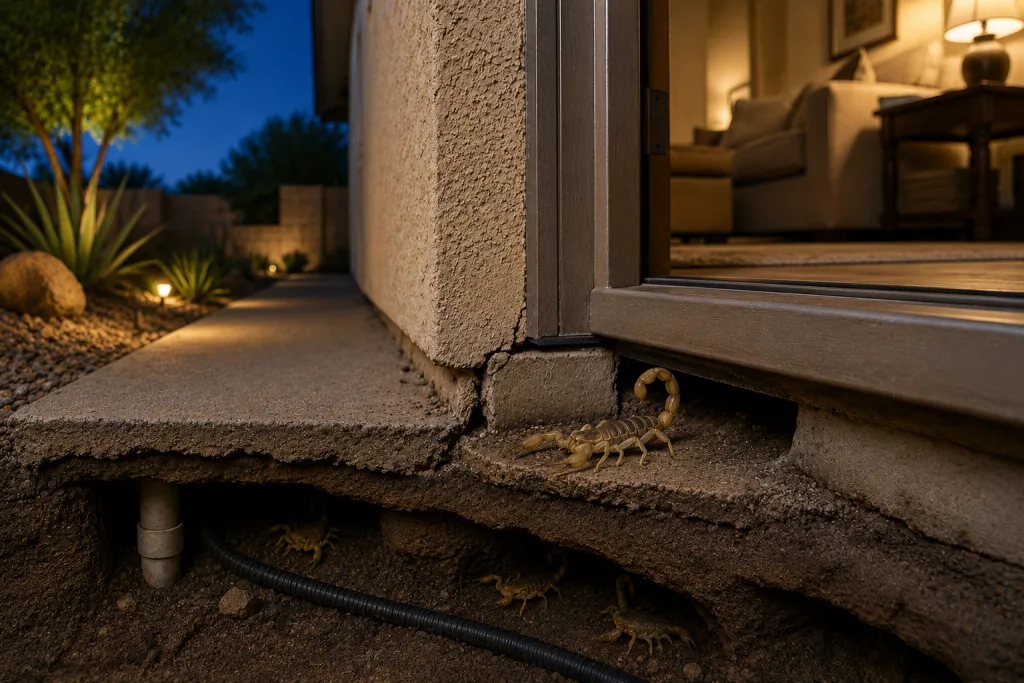
Food Sources Around Your Home
Scorpions don’t show up randomly. If they’re around your home, it usually means there’s a steady food supply keeping them there.
- Crickets, roaches, and other insects attract scorpions
- These are primary food sources, especially in Arizona
- If insect activity is high, scorpions will stay and continue hunting in the same areas
- Garages, yards, and block walls often become feeding zones
- Outdoor lighting increases insect activity
- Bright white lights attract flying insects at night
- That draws in ground insects, which then attract scorpions
- Entry points near lit areas become higher-risk zones for scorpion activity
If you don’t control the insects, you won’t control the scorpions. It’s that direct.
Moisture and Shelter
Even in the desert, scorpions seek out moist, shaded areas during the day.
- Irrigation systems, leaky hoses, and shaded landscaping
- Overwatering near the foundation creates ideal hiding conditions
- Drip systems and pooling water attract insects, which attract scorpions
- Dense plants and shaded areas give them protection from the heat
- Block walls and rock beds are common in Phoenix homes
- Block walls offer cool, protected voids where scorpions can live and breed
- Rock landscaping holds heat at night and provides cover during the day
- These features create a consistent habitat right next to your home
This is why scorpion issues are so common in newer Phoenix neighborhoods. The landscaping and construction naturally support them.
Structural Entry Points
Once scorpions are active around your home, it doesn’t take much for them to get inside.
- Gaps under doors
- One of the most common entry points
- Even small gaps are enough for scorpions to slip through
- Weep holes in block construction
- Standard in many Arizona homes
- Provide direct access into wall voids and interior spaces if left unsealed
- Cracks in the foundation and walls
- Small fractures become entry routes over time
- Often overlooked until indoor sightings increase
Without sealing these access points, repellents don’t matter. Scorpions will continue finding their way inside as long as the environment around the home supports them.
Why Local Expertise Matters
Scorpion control in Arizona isn’t the same as in other parts of the country. The environment, construction styles, and species all work in their favor.
- Bark scorpions unique to the region
- The Arizona bark scorpion is the most common and most problematic species locally
- Known for climbing walls, ceilings, and even getting into beds and furniture
- More difficult to control than ground-dwelling species found in other states
- Climate supports year-round activity
- Mild winters mean scorpions don’t fully go dormant
- Activity slows but doesn’t stop, which allows populations to stay established
- Peak activity in warmer months, but sightings can happen any time of year
- Common construction types create entry points
- Block construction includes weep holes that act as entry channels
- Stucco exteriors develop cracks over time
- Garage seals, door sweeps, and thresholds wear down quickly in the heat
These factors make generic advice unreliable. What works in other regions often doesn’t hold up in Phoenix-area homes.
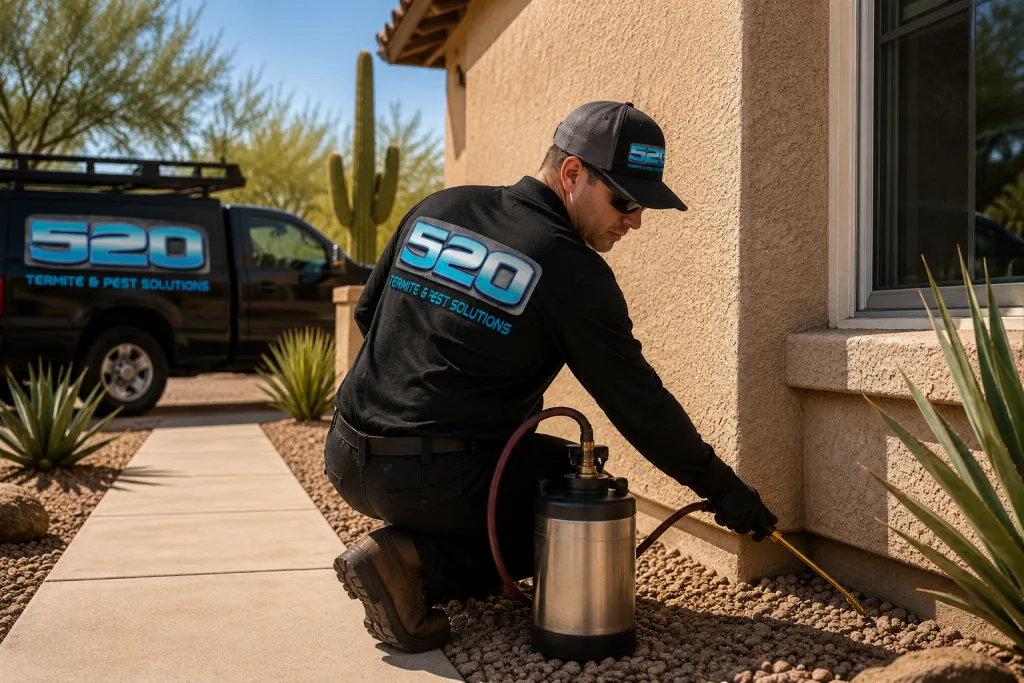
How 520 Termite & Pest Control Approaches Scorpion Control
This is where local experience changes the outcome. Scorpion control requires more than just applying a product. It’s about understanding how they move, where they hide, and why they’re on your property in the first place.
- Local knowledge of scorpion behavior
- Identifying high-risk zones specific to Arizona homes
- Understanding seasonal patterns and activity spikes
- Targeting areas like block walls, rock beds, and irrigation zones
- Customized treatment plans based on property layout
- No one-size-fits-all approach
- Adjusting treatments based on home design, landscaping, and the surrounding environment
- Focusing on both interior and exterior pressure points
- Focus on long-term prevention, not just quick fixes
- Reducing insect populations that attract scorpions
- Reinforcing exclusion methods to stop entry
- Creating a layered strategy that holds up over time
Homeowners who rely on general advice or one-time treatments usually end up dealing with recurring issues. A local, targeted approach is what actually reduces scorpion activity and keeps it under control.
Get Rid Of Scorpions For Good
Natural scorpion repellents can help at the margins, but they’re not a complete solution. Most of them offer short-term or limited impact, and none of them address the underlying reasons scorpions are on your property in the first place.
Real control comes down to a few non-negotiables:
- Eliminating food sources like crickets and other insects
- Sealing entry points so scorpions can’t get inside
- Reducing the conditions around your home that allow them to hide and thrive
Homeowners who rely solely on natural methods usually experience the same cycle. Temporary relief, then repeat sightings. The problem isn’t the product. It’s the approach. A combined strategy that includes prevention, exclusion, and targeted treatment is what actually reduces scorpion activity and keeps it that way.
Contact 520 Termite & Pest Control for a targeted inspection and a strategy tailored to your property. You’ll get a clear understanding of the problem’s root cause and how to fix it.
FAQs
Do essential oils keep scorpions away permanently?
No. Essential oils may create a short-term deterrent due to their strong scent, but the effect fades quickly. They require constant reapplication and don’t eliminate scorpions or prevent new ones from entering.
Is diatomaceous earth safe to use around pets and kids?
Yes, when applied correctly. Use food-grade diatomaceous earth and avoid spreading it in areas where it can be easily disturbed or inhaled. Its effectiveness depends on staying dry and in place.
What is the most effective natural way to reduce scorpions?
Focus on prevention over repellents. Seal entry points, reduce insect activity, eliminate excess moisture, and clean up areas where scorpions can hide. These steps have more impact than any spray.
Why am I still seeing scorpions after using natural repellents?
Because repellents don’t address the source of the problem. Scorpions are still being attracted by food, shelter, and access points. Until those are handled, activity will continue.
When should I call a professional for scorpion control?
When sightings become frequent, especially indoors, or when DIY methods stop working. At that point, the issue usually requires a targeted treatment plan to get it under control.
For more on scorpion sting symptoms and when to seek care, see Banner Health’s guide to bark scorpions.